
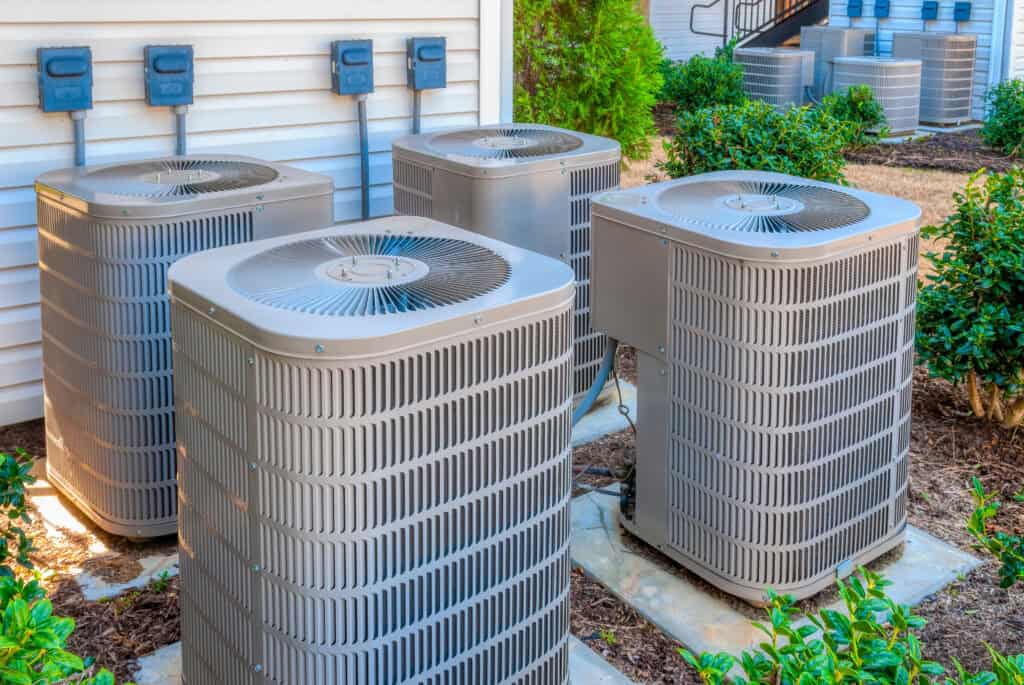
Deciding how to cool your home comes down to square footage, layout, and daily comfort. A single window unit uses less electricity than whole-home cooling when you only need to cool one bedroom. However, running several room units throughout a home uses substantial power. An efficient central A/C system often handles larger spaces with better results.
Many homeowners in our area ask: Is it cheaper to run a window unit or central air? When comparing a window unit vs. central air, the answer depends on equipment sizing, energy ratings, and your floor plan. Summer weather brings high heat and heavy humidity to the Mahoning Valley. You need a cooling setup that manages indoor temperature and sticky air without driving electric bills higher. Learning how efficiency ratings work helps you pick the best setup for your household.
Window Unit vs Central Air: Cooling Efficiency Ratings
Comparing a window unit vs central air starts with understanding energy efficiency ratings. Central A/C systems and room units use different rating scales. Knowing these metrics makes it easier to compare your options.
When evaluating a window air conditioner vs central air, you will see two common ratings: SEER2 and CEER. Central air conditioning uses SEER2, which stands for Seasonal Energy Efficiency Ratio 2. This standard measures how well a central system cools over an entire cooling season. SEER2 ratings account for airflow resistance inside home ductwork. A higher SEER2 number means the system produces cooling while using less electricity.
Room units use CEER, or Combined Energy Efficiency Ratio. This rating measures active cooling power along with standby power consumption. When you weigh a window unit vs central air, remember that higher numbers on either scale show better energy performance.
Getting the Sizing Right
Efficiency ratings only help if you install the right equipment size for your room. Cooling capacity is measured in BTUs, or British Thermal Units. One BTU is the amount of heat an air conditioner removes from a room in one hour.
Proper sizing is vital for your comfort and energy use. An undersized unit runs nonstop on hot afternoons and struggles to lower the temperature. An oversized unit cools a space too fast and shuts down before removing humidity. That short cycle leaves your living space feeling cold and clammy.
According to ENERGY STAR sizing guidance, a 6,000-BTU room unit cools between 150 and 250 square feet. You should make simple adjustments for specific room conditions:
- For very sunny rooms, increase cooling capacity by 10 percent.
- If more than two people regularly use the room, add 600 BTUs for each extra person.
- In kitchens, add 4,000 BTUs to handle heat from stoves and ovens.
These adjustments add together. A sunny kitchen where four family members gather needs far more cooling power than the room measurements show.
Window Unit vs Central Air: What Fits Your Home?
Which Option Works Best for the Whole House?
Choosing between a window unit vs. central air requires looking at your whole house. A central A/C system draws more electrical power than a one-room unit. However, a central system distributes cool air through every room at the same time. If you install separate units in four or five rooms, their combined electrical draw often surpasses a single central system. Multiple units also lead to hot spots and uneven humidity levels across your home. For whole-home comfort, central air provides balanced temperatures and better overall efficiency.
Still, a single room unit works well in specific situations:
- Rental homes or apartments where you cannot alter ductwork or wiring.
- Small studio apartments where one unit cools the entire living area.
- Single rooms used during the day, such as a home office when the rest of the house sits empty.
The main difference comes down to scale. A room unit makes sense when you only need to cool one specific room. Older homes across Niles, Warren, and Youngstown sometimes lack ductwork. In those houses, a ductless mini-split provides a great alternative. Wall-mounted indoor heads deliver quiet cooling and high efficiency without requiring full duct installation.
Maintenance Factors That Impact Your Cooling Costs
Routine upkeep directly affects what you spend to cool your living space. When you compare a window unit vs. central air, regular maintenance keeps either system running at peak performance. Dirty components force equipment to run longer cycles, which wastes electricity and strains internal motors.
A central air conditioning system relies on steady airflow. You should inspect your air filters every month during hot summer weather. Replacing a clogged filter with a clean filter restores airflow and protects the blower motor. The U.S. Department of Energy notes that replacing a dirty filter can lower air conditioner energy consumption by 5 to 15 percent. You should also keep grass clippings and outdoor brush away from the outdoor condenser unit.
Room units also require simple upkeep. Most window models contain a removable mesh filter behind the front grill. Wash this filter with warm water every few weeks during the summer. A clogged mesh filter restricts airflow and causes frost to form on the indoor coil. That frost buildup forces the compressor to run constantly while failing to cool the room.
Professional service makes a big difference for central systems. A licensed technician can perform a comprehensive inspection each spring:
- Checking refrigerant levels to ensure the system operates at its factory SEER2 efficiency.
- Cleaning the blower wheel so ductwork receives full air volume.
- Tightening electrical connections and inspecting safety switches.
Room units are factory-sealed appliances. Technicians cannot service internal refrigerant lines on room units, so a failed component usually requires total equipment replacement.
Indoor Air Quality and Humidity Control
Controlling indoor moisture is essential during humid Ohio summers. Central air systems remove humidity from your entire home as warm air moves across the indoor evaporator coil. Water condenses on the coil fins and drains outdoors. Window units only remove moisture from the room where they sit. If you run a unit in the bedroom, your living room and hallways stay humid. Moist air feels warmer than dry air, which tempts you to lower the thermostat setting and waste energy.
Central systems also clean the air you breathe. A whole-house system pushes air through media filters that capture pollen, dust, and pet dander from every room. You can also connect dedicated indoor air quality systems, such as whole-home dehumidifiers or air purifiers. Room units use simple mesh screens that only trap large lint and dust bunnies.
Smart Thermostat Strategies
Turning your thermostat down to extreme cold temperatures does not cool your house any faster. Air conditioners cool at a fixed rate regardless of your setting. Using smart thermostats helps you manage cooling run times without sacrificing comfort.
A sensible temperature setback strategy reduces wear on your equipment. You can raise the thermostat setting by a few degrees when you leave for work. A smart thermostat automates this schedule based on your daily routine. The thermostat returns the house to your preferred temperature right before you return home, keeping your space comfortable without wasting energy all day.
Wrapping Up Your Cooling Options
Deciding on a window unit vs. central air comes down to your home size, layout, and daily habits. A single room unit works well for a guest bedroom or small office. However, central A/C provides dependable, balanced comfort for a full house. Running multiple room units uses substantial power and struggles to control humidity across multiple rooms. For older homes in our area without ductwork, ductless mini-splits offer a quiet and efficient alternative. Choose the system that fits your square footage so your home stays cool and comfortable all summer long.
Ready for Reliable Comfort?
When you are ready to improve your home cooling, A to Z Dependable Services is here to help. Serving the Mahoning Valley since 1960, our licensed and experienced technicians help you find the right cooling solution for your home. We provide upfront pricing on every project, along with 24/7 emergency service and senior and military discounts. Learn more about our options for cooling installation and system maintenance and repair. Contact our team at A to Z Dependable Services today to schedule your consultation and keep your home comfortable all summer.
Deciding how to cool your home comes down to square footage, layout, and daily comfort. A single window unit uses less electricity than whole-home cooling when you only need to cool one bedroom. However, running several room units throughout a home uses substantial power. An efficient central A/C system often handles larger spaces with better results.
Many homeowners in our area ask: Is it cheaper to run a window unit or central air? When comparing a window unit vs. central air, the answer depends on equipment sizing, energy ratings, and your floor plan. Summer weather brings high heat and heavy humidity to the Mahoning Valley. You need a cooling setup that manages indoor temperature and sticky air without driving electric bills higher. Learning how efficiency ratings work helps you pick the best setup for your household.
Window Unit vs Central Air: Cooling Efficiency Ratings
Comparing a window unit vs central air starts with understanding energy efficiency ratings. Central A/C systems and room units use different rating scales. Knowing these metrics makes it easier to compare your options.
When evaluating a window air conditioner vs central air, you will see two common ratings: SEER2 and CEER. Central air conditioning uses SEER2, which stands for Seasonal Energy Efficiency Ratio 2. This standard measures how well a central system cools over an entire cooling season. SEER2 ratings account for airflow resistance inside home ductwork. A higher SEER2 number means the system produces cooling while using less electricity.
Room units use CEER, or Combined Energy Efficiency Ratio. This rating measures active cooling power along with standby power consumption. When you weigh a window unit vs. central air, remember that higher numbers on either scale show better energy performance.
Getting the Sizing Right
Efficiency ratings only help if you install the right equipment size for your room. Cooling capacity is measured in BTUs, or British Thermal Units. One BTU is the amount of heat an air conditioner removes from a room in one hour.
Proper sizing is vital for your comfort and energy use. An undersized unit runs nonstop on hot afternoons and struggles to lower the temperature. An oversized unit cools a space too fast and shuts down before removing humidity. That short cycle leaves your living space feeling cold and clammy.
According to ENERGY STAR sizing guidance, a 6,000-BTU room unit cools between 150 and 250 square feet. You should make simple adjustments for specific room conditions:
- For very sunny rooms, increase cooling capacity by 10 percent.
- If more than two people regularly use the room, add 600 BTUs for each extra person.
- In kitchens, add 4,000 BTUs to handle heat from stoves and ovens.
These adjustments add together. A sunny kitchen where four family members gather needs far more cooling power than the room measurements show.
Window Unit vs Central Air: What Fits Your Home?
Which Option Works Best for the Whole House?
Choosing between a window unit vs. central air requires looking at your whole house. A central A/C system draws more electrical power than a one-room unit. However, a central system distributes cool air through every room at the same time. If you install separate units in four or five rooms, their combined electrical draw often surpasses a single central system. Multiple units also lead to hot spots and uneven humidity levels across your home. For whole-home comfort, central air provides balanced temperatures and better overall efficiency.
Still, a single room unit works well in specific situations:
- Rental homes or apartments where you cannot alter ductwork or wiring.
- Small studio apartments where one unit cools the entire living area.
- Single rooms used during the day, such as a home office when the rest of the house sits empty.
The main difference comes down to scale. A room unit makes sense when you only need to cool one specific room. Older homes across Niles, Warren, and Youngstown sometimes lack ductwork. In those houses, a ductless mini-split provides a great alternative. Wall-mounted indoor heads deliver quiet cooling and high efficiency without requiring full duct installation.
Maintenance Factors That Impact Your Cooling Costs
Routine upkeep directly affects what you spend to cool your living space. When you compare a window unit vs. central air, regular maintenance keeps either system running at peak performance. Dirty components force equipment to run longer cycles, which wastes electricity and strains internal motors.
A central air conditioning system relies on steady airflow. You should inspect your air filters every month during hot summer weather. Replacing a clogged filter with a clean filter restores airflow and protects the blower motor. The U.S. Department of Energy notes that replacing a dirty filter can lower air conditioner energy consumption by 5 to 15 percent. You should also keep grass clippings and outdoor brush away from the outdoor condenser unit.
Room units also require simple upkeep. Most window models contain a removable mesh filter behind the front grill. Wash this filter with warm water every few weeks during the summer. A clogged mesh filter restricts airflow and causes frost to form on the indoor coil. That frost buildup forces the compressor to run constantly while failing to cool the room.
Professional service makes a big difference for central systems. A licensed technician can perform a comprehensive inspection each spring:
- Checking refrigerant levels to ensure the system operates at its factory SEER2 efficiency.
- Cleaning the blower wheel so ductwork receives full air volume.
- Tightening electrical connections and inspecting safety switches.
Room units are factory-sealed appliances. Technicians cannot service internal refrigerant lines on room units, so a failed component usually requires total equipment replacement.
Indoor Air Quality and Humidity Control
Controlling indoor moisture is essential during humid Ohio summers. Central air systems remove humidity from your entire home as warm air moves across the indoor evaporator coil. Water condenses on the coil fins and drains outdoors. Window units only remove moisture from the room where they sit. If you run a unit in the bedroom, your living room and hallways stay humid. Moist air feels warmer than dry air, which tempts you to lower the thermostat setting and waste energy.
Central systems also clean the air you breathe. A whole-house system pushes air through media filters that capture pollen, dust, and pet dander from every room. You can also connect dedicated indoor air quality systems, such as whole-home dehumidifiers or air purifiers. Room units use simple mesh screens that only trap large lint and dust bunnies.
Smart Thermostat Strategies
Turning your thermostat down to extreme cold temperatures does not cool your house any faster. Air conditioners cool at a fixed rate regardless of your setting. Using smart thermostats helps you manage cooling run times without sacrificing comfort.
A sensible temperature setback strategy reduces wear on your equipment. You can raise the thermostat setting by a few degrees when you leave for work. A smart thermostat automates this schedule based on your daily routine. The thermostat returns the house to your preferred temperature right before you return home, keeping your space comfortable without wasting energy all day.
Wrapping Up Your Cooling Options
Deciding on a window unit vs. central air comes down to your home size, layout, and daily habits. A single room unit works well for a guest bedroom or small office. However, central A/C provides dependable, balanced comfort for a full house. Running multiple room units uses substantial power and struggles to control humidity across multiple rooms. For older homes in our area without ductwork, ductless mini-splits offer a quiet and efficient alternative. Choose the system that fits your square footage so your home stays cool and comfortable all summer long.
Ready for Reliable Comfort?
When you are ready to improve your home cooling, A to Z Dependable Services is here to help. Serving the Mahoning Valley since 1960, our licensed and experienced technicians help you find the right cooling solution for your home. We provide upfront pricing on every project, along with 24/7 emergency service and senior and military discounts. Learn more about our options for cooling installation and system maintenance and repair. Contact our team at A to Z Dependable Services today to schedule your consultation and keep your home comfortable all summer.